

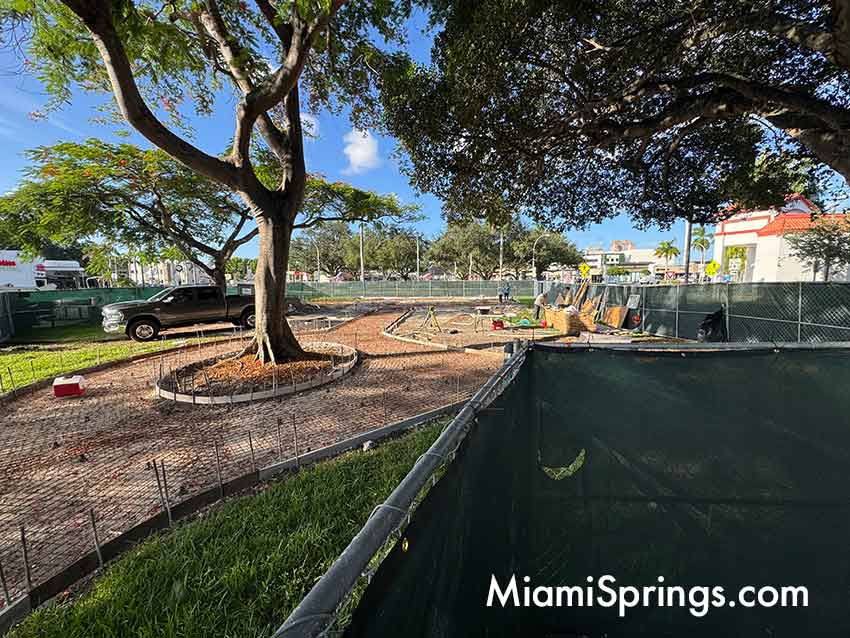
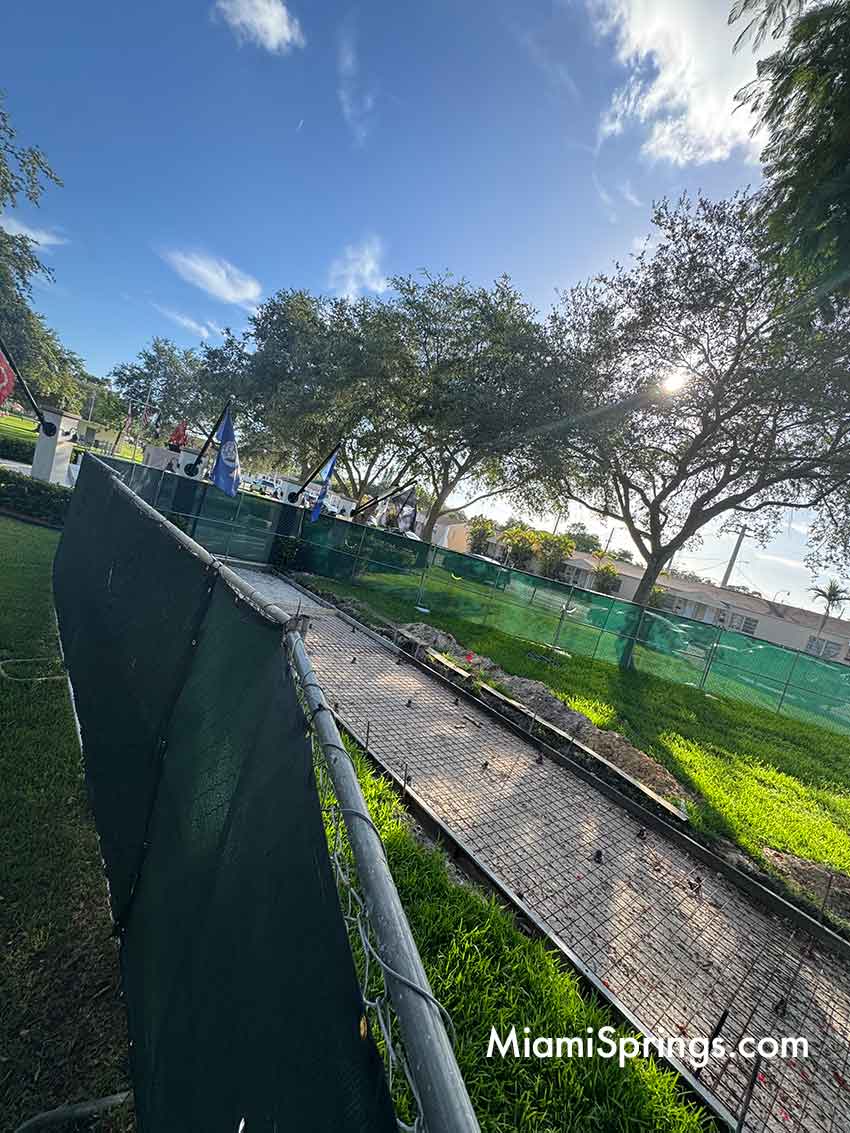
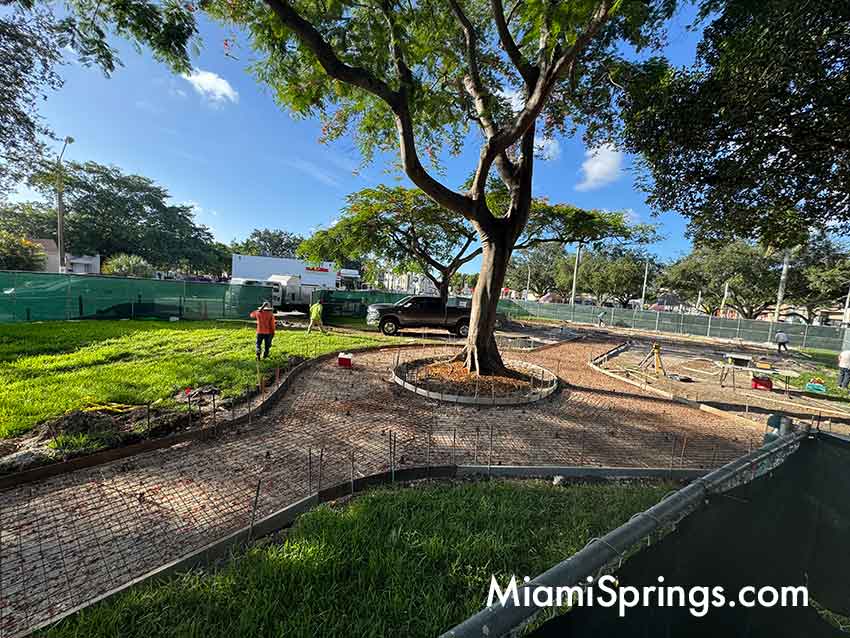
Construction is moving fast on the brand new Glenn Curtiss Monument and June Bug Legacy Memorial on Curtiss Parkway. We’ve seen work happening on weekends and late on weekdays to have this completed in time for the city’s centennial celebration. This is an incredible effort to commemorate Miami Springs history and the history of our founder, famed aviator, inventor, and developer, Glenn Curtiss.

The beautiful proposal features a bronze, life-sized sculpture of our founder, aviation pioneer, and the father of naval aviation, Glenn Hammond Curtiss. The statue would rest atop a four sided pedestal. The pedestal itself would feature bronze reliefs on each side with details on Curtiss’ legacy and many accomplishments.

Each bronze relief will highlight a unique area of accomplishment by Curtiss including:

- Aviation Pioneer – Curtiss piloting one of his early aircraft, such as the June Bug or Curtiss Jenny, commemorating his aviation milestones and role in shaping the birth of powered flight.
- Military Innovator – Depiction of Curtiss collaborating with the U.S. Navy, highlighting his contributions to seaplane development and the establishment of naval aviation training. Glenn Curtiss is considered the “father of naval aviation.”
- City Builder – A relief showing curtiss planning Miami Springs and neighboring communities, surrounded by the Mediterranean Revival architecture and palm trees – a tribute to his urban planning and development legacy. As a reminder, Curtiss along with James Bright, founded the cities of Miami Springs, Hialeah, and Opa-Locka.
- Motorcycling Legend – A panel featuring Curtiss on his V8 motorcycle, capturing his 1907 land-speed record and early engineering brilliance before entering aviation. Glenn Curtiss initially gained fame as the “Fastest Man on Earth” powering his V8 motorcycle to a speed of 136.3 mph on Ormond Beach, Florida back in 1907.

The third component of the Glenn Curtiss and June Bug Legacy Memorial is a replica of the wings of the famous June Bug airplane. You see, unlike the private first flight by the Wright Brothers, Glenn Curtiss was the first pilot to complete an officially observed, pre-announced public flight of over one kilometer in the United States. And the June Bug was the plane Curtiss used to accomplish the record feat back on July 4, 1908. As a result of this accomplishment, Curtiss was awarded the Scientific American Trophy.

The success of the June Bug was a turning point for Curtiss. It catapulted him into the national spotlight, brought him the backing of the Aerial Experiment Association (AEA), and laid the foundation for his role in forming the Curtiss Aeroplane and Motor Company—eventually a cornerstone of the U.S. aviation industry. This moment signaled the beginning of Curtiss’ rise as a formidable innovator and competitor in early aviation, ultimately leading to his lasting legacy as the “Father of Naval Aviation.”

The Glenn Curtiss Monument and June Bug Legacy Memorial will help to keep the legacy of Glenn Curtiss alive for generations to come. More importantly, it provides an opportunity to inspire future generations of pioneers in aviation, racing, and building.

Glenn Curtiss Monument
Seeing and sharing this monument is like watching a dream turning into reality. We can’t say enough good things of the work Natalie Plasencia Calvo and the entire design team did in presenting this incredible statue and monument for our community. It’s beautiful and educational. It will become a place where people come to reflect, read, learn, admire, and photograph.
This monument will also become a draw for historical tourism. It’s another magnet to bring people to downtown Miami Springs. Furthermore, it augments the beautification the city has already completed on Curtiss Parkway with the newly renovated war memorial.

Timeline of Glenn Hammond Curtiss’ Achievements
1878
🔹 Born – Glenn Hammond Curtiss is born on May 21 in Hammondsport, New York.
1902–1904
🔧 Early Engineering & Motorcycles – Begins designing and building high-performance motorcycles.
🏁 1903 – Sets a motorcycle land speed record of 64 mph.
🏁 1907 – Achieves 136.3 mph on a V8-powered motorcycle, earning the title “Fastest Man on Earth”.
1904–1907
✈️ Begins Aviation Work – Collaborates with Thomas Baldwin and Alexander Graham Bell’s Aerial Experiment Association (AEA), building powerful lightweight engines for dirigibles and early aircraft.
1908
🛩️ AEA June Bug – Designs and pilots the June Bug, which wins the Scientific American Trophy for the first public flight of over 1 km in the U.S.
🏆 Award – First American to win a prestigious aviation prize (Scientific American Trophy).
1909
🏆 International Fame – Wins the Gordon Bennett Cup in France for the fastest flight over a closed circuit (47 mph), bringing international recognition.
✈️ Curtiss No. 1 ‘Golden Flyer’ – Builds and flies his first officially recognized aircraft.
1910
📦 First Naval Aircraft – Demonstrates the feasibility of naval aviation by flying a plane from land to a ship and back.
👨✈️ Pilot Training – Opens the Curtiss Flying School, training both civilian and military pilots.
🛩️ Albany–New York Flight – Wins $10,000 for the first flight from Albany to NYC, a 150+ mile trek over the Hudson River.
🏆 Collier Trophy – Receives the Collier Trophy for the greatest achievement in aviation in America.
1911
🚢 First Shipboard Takeoff – Eugene Ely, using a Curtiss plane, performs the first takeoff from a naval ship.
📜 Licensed Aviation School – Curtiss opens the first licensed aircraft manufacturing company in the U.S.
1912–1915
🛠️ Hydroaeroplane Development – Invents and improves seaplanes, creating the first practical flying boat.
🛩️ Flying Boats Used by U.S. Navy – Sets the foundation for naval aviation.
1914–1918 (WWI)
⚙️ Mass Military Production – Curtiss Aeroplane and Motor Company becomes a major aircraft supplier for Allied forces.
🏭 Largest Aircraft Manufacturer – Curtiss’ company is the largest aircraft producer in the world during WWI.
✈️ Notable Designs – Develops the Curtiss JN-4 “Jenny”, one of the most famous trainer aircraft of the war.
1920
🏙️ Land Development – Begins work in real estate and urban planning in Florida, helping to found cities like Miami Springs, Hialeah, and Opa-locka.
📦 Merges with Wright Company – Curtiss Aeroplane merges with Wright Aeronautical to form Curtiss-Wright Corporation.
1930
⚰️ Death – Curtiss dies on July 23 at age 52 from complications following surgery.
Posthumous Recognition
🏅 National Aviation Hall of Fame – Inducted in 1964.
🏅 International Air & Space Hall of Fame – Inducted in 1965.
🏛️ Legacy – Museums, schools, and airports are named in his honor, recognizing his monumental role in aviation and innovation.
Monument Costs
- Phase 1
- Glenn Curtiss Memorial Bronze Statue (incl. $10,000 artist fee donation) *$80,000
- Bronze Reliefs (4) $12,000
- Statue / Clock Plinth Engineering $10,000
- Statue Plinth and Foundation $15,000
- Remove/Relocation of the Cavalier Clock $5,000
- Cavalier Clock Foundation $5,000
- Westward Side walks, lighting, landscape $10,000
- PHASE 1 TOTAL: $137,000
- Phase 2
- June Bug Legacy Memorial $88,000
- Aluminum, Stainless Steel, Tension Cable, Exhibition Wing $25,000
- Historical Plaques and Graphics (12 – 18 Stations) $15,000
- Memorial Concrete Floor $20,000
- Sidewalks $23,000
- Lighting / Landscape $5,000
- PHASE 2 TOTAL: $88,000
- TOTAL PROJECT COST: $225,000


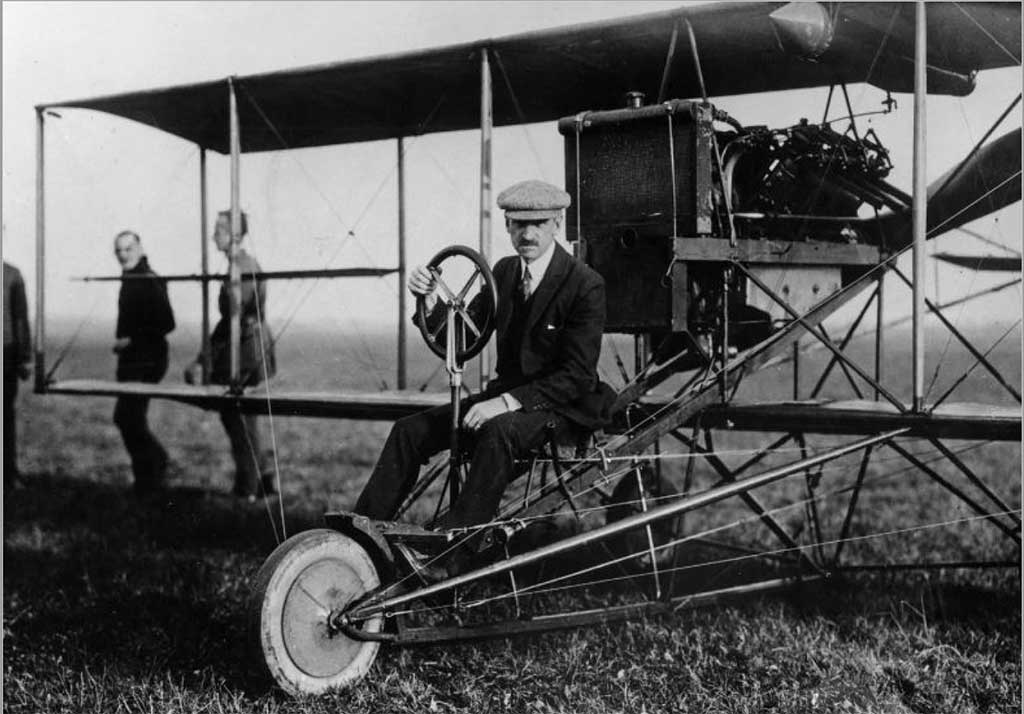
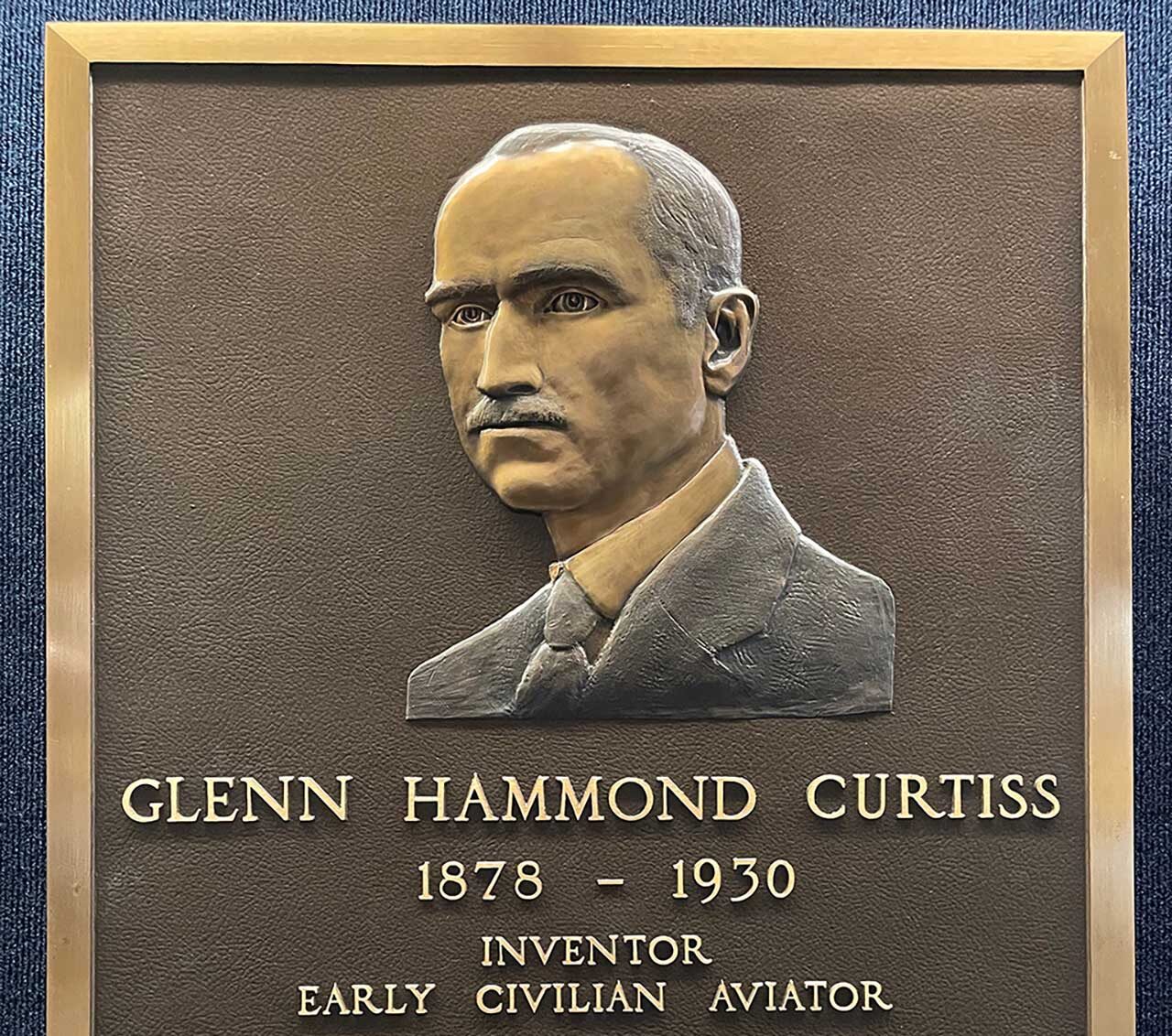
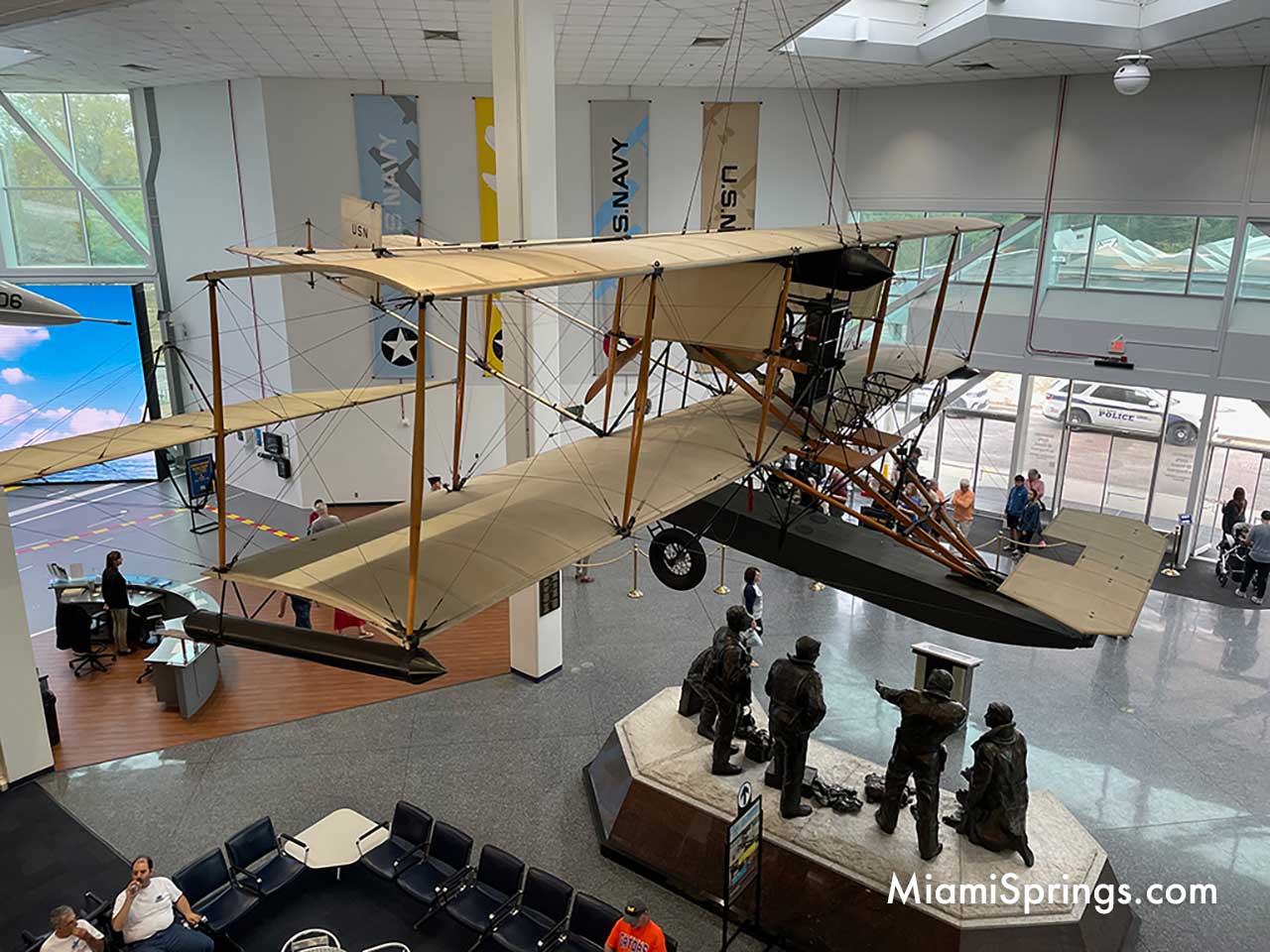
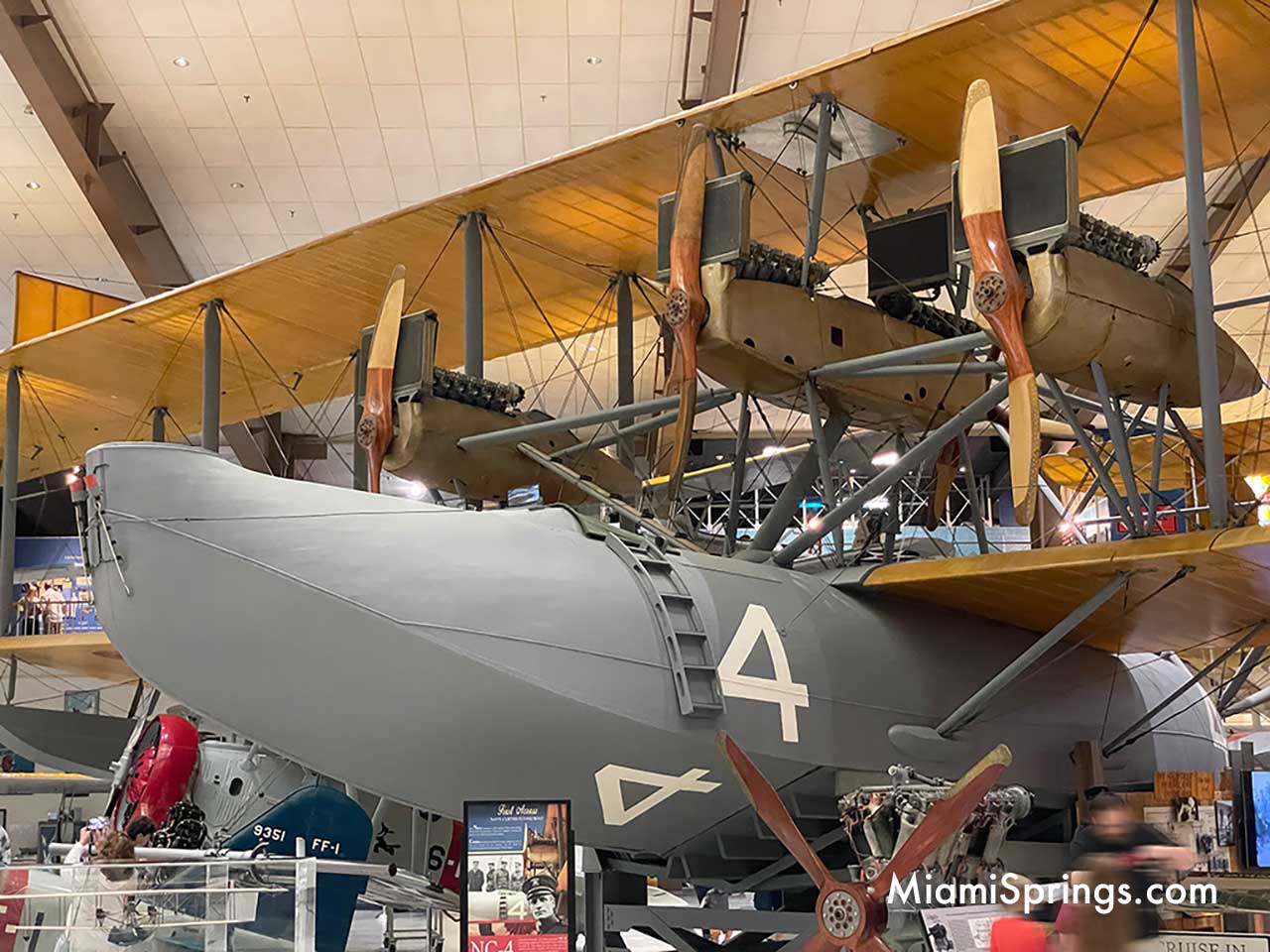
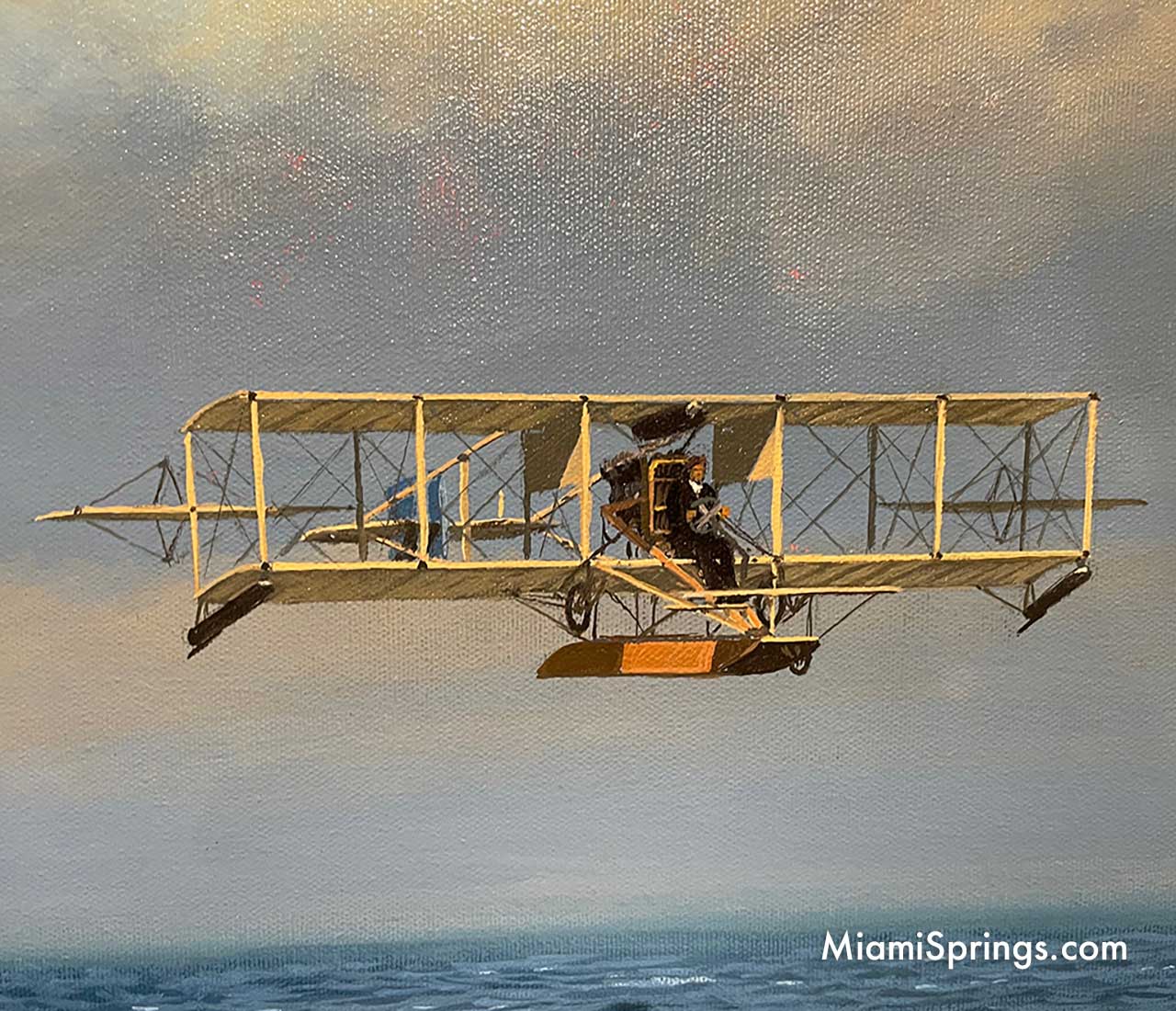
Glenn Curtiss and the National Naval Aviation Museum in Pensacola
Below we have included some of the recognition and some of the planes that have been restored at the National Naval Aviation Museum in Pensacola, Florida.
Unveiling
The Glenn Curtiss Monument and June Bug Legacy Memorial is expected to be unveiled at the Centennial Celebration on August 22nd.