

Early 1900s – James Bright Arrives in Miami
James H. Bright, a Missouri cattleman and pioneer developer, arrived in Miami from Missouri sometime in the early 1900s. While 1909 is the most cited year for his arrival and land purchase, other accounts suggest he arrived as early as 1904 or acquired land in 1901.
1909 -1910 – Initial Acquisition
- Bright purchased 17,000 acres of “submerged” land northwest of Miami, starting in 1909 and securing warranty deeds around 1910, with plans to develop a cattle ranch. Other records indicate he purchased 640 acres to start this venture.
1910s: Draining the Eastern Everglades
1910 -1913 – The C-6 MIAMI CANAL
The Miami Canal (also known as the C-6 Canal) was dredged in the early 20th century, specifically around 1910–1913, as part of a large-scale effort to drain the Everglades and make South Florida land suitable for agriculture and development.
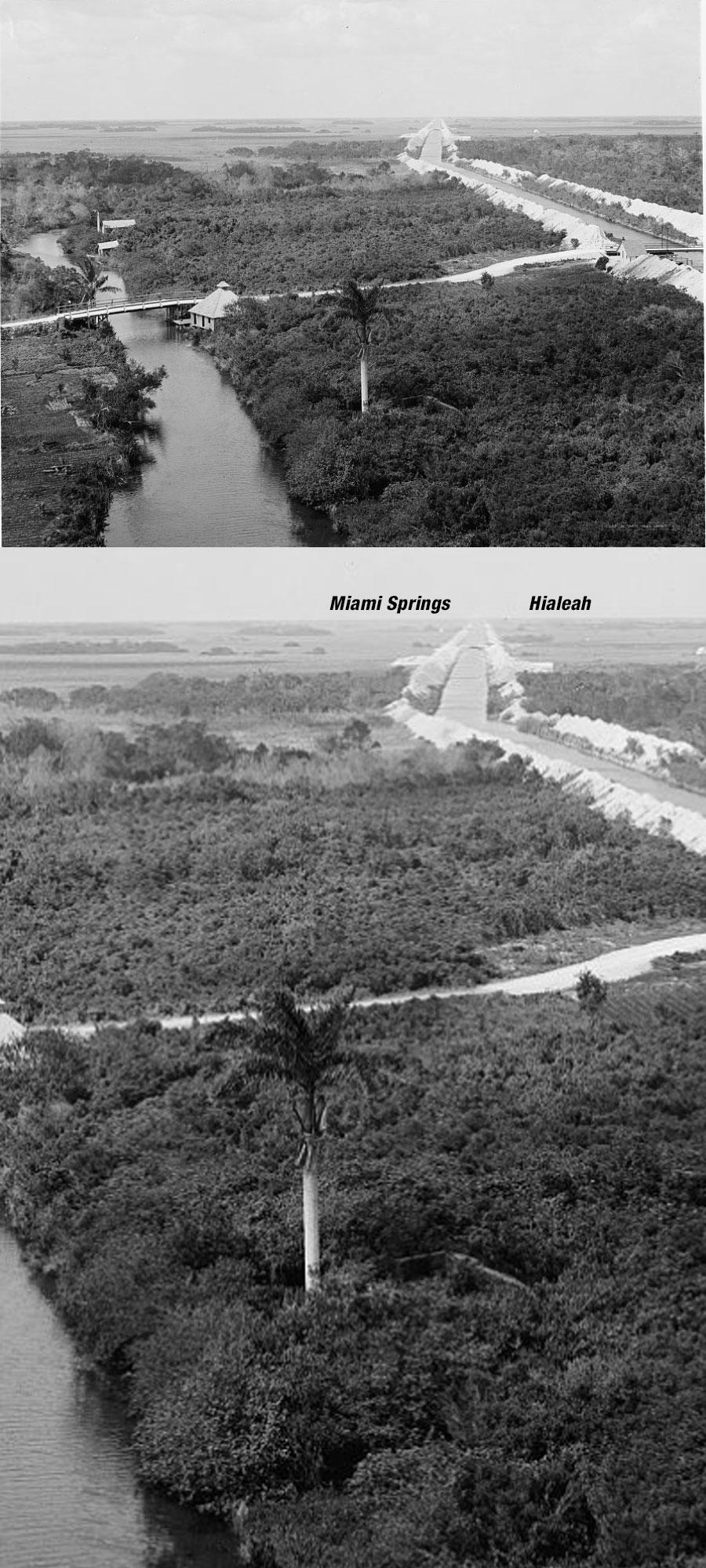
The dredging was overseen by the Internal Improvement Fund and later by the Everglades Drainage District, which was established in 1907. The Miami Canal begins at Lake Okeechobee and runs southeast to downtown Miami, and it played a major role in the development of cities like Hialeah and Miami Springs.

The Miami Canal made modern living possible in areas like Miami Springs, Hialeah, Doral, Miami-Lakes and more. While there’s no turning back the clock, the dredging of the Miami Canal was, and continues to be, an ecological disaster.
Once the C-6 Canal was dredged (1910–1913), the landscape changed dramatically:
-
The land drained and became arable and buildable.
-
Developers like Glenn Curtiss and James Bright purchased and subdivided large tracts for Country Club Estates, later known as Miami Springs.
1909 -1916 – The Bright Brothers Ranch
After purchasing his initial tract of submerged South Florida land in 1909, James H. Bright focused entirely on agriculture and ranching. Before the 1916 partnership with Glenn Curtiss shifted his focus to real estate, Bright transformed the raw landscape into a highly innovative agricultural operation.
Here is what he did with the land during those early years:
-
Drained the Property: Because the initial 640 acres he bought were largely underwater, his very first project was to dig a canal to drain the land so it could be utilized.
-
Built a Ranch and Dairy: As a cattleman seeking a climate for year-round grazing, he turned the newly drained acreage into a sprawling cattle ranch and dairy farm. He built his house and the ranch headquarters near what is now the intersection of Hialeah Drive and East Second Avenue.
-
Introduced Brahman Cattle: Bright was a pioneer in Florida’s livestock industry. He introduced the first Brahman cattle to the state, recognizing that the breed would be highly resilient in the harsh, subtropical heat and humidity.
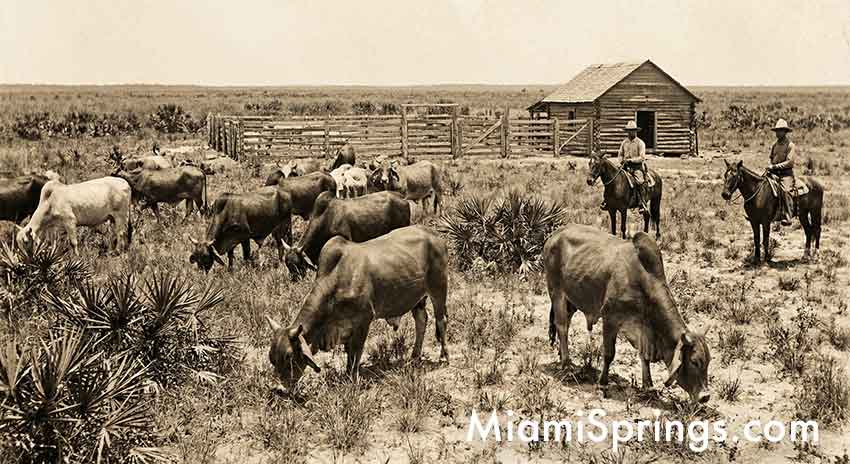
Brahman Cattle -
Cultivated Subtropical Grasses: To sustain his herds, Bright introduced “para grass” to Florida. He spent years experimenting with various subtropical grasses to optimize grazing, and his successful methods became widely adopted throughout the national livestock industry.
-
Founded a Professional Association: Using the success of his South Florida ranch as a foundation, he founded the Florida Breeders Association to advance agricultural practices in the region.
Essentially, for the first seven years, “The Bright Ranch” was a massive, working agricultural laboratory and dairy farm.
1916: James Bright Meets Glenn Curtiss
- Meeting/Early Contact: While some sources cite 1909 as when they first saw the potential of the area, other records indicate they were working on land projects by 1916.
- Partnership Creation: The Curtiss-Bright Ranch Company was officially incorporated on January 27, 1921.
- Name Change: On December 30, 1922, the company name was changed to the Curtiss-Bright Company.
Related Articles:
Miami Springs Centennial Events: