

1940s: World War II Era
Miami Springs population in 1940: 898
The 1940s were a pivotal decade for Miami Springs, marked by World War II’s impact, civic development, and postwar growth. The city evolved from a quiet, garden-style community into a more robust and strategically important suburb of Miami. It was also a time of sacrifice with men who died overseas and others who came back with physical and mental scars. Here’s a breakdown of the major events and developments that shaped Miami Springs during the 1940s:
World War II and Military Activity (1941–1945)
-
Miami Army Air Field, located just south of Miami Springs (now part of Miami International Airport), became an active military airfield during WWII.
-
Miami Springs’ proximity to the base made it a key housing and support community for military personnel.
-
Many homes and facilities in the city were rented or repurposed for military families and operations, leading to a population increase.
-
Curtiss Mansion and other public buildings were used in support roles during the war years.
World War II Hits Home
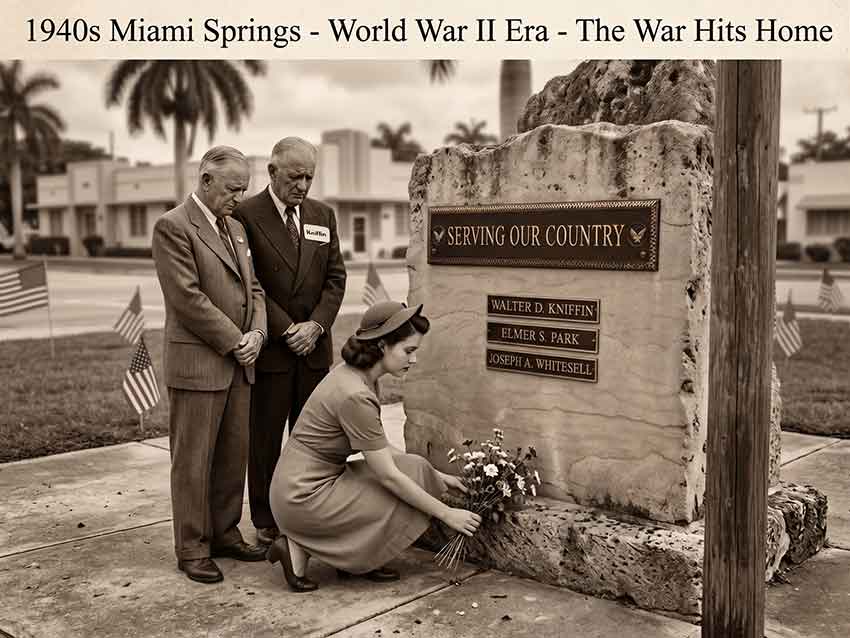
Walter Dressler Kniffin, USMC – June 14, 1902 – February 23, 1945 – Age: 42

Walter D. Kniffin served as Chief of Police for the City of Miami Springs. According to a great report by Bill Tallman, Kniffin is the man in the center of this 1937 photo of the Miami Springs Police Department.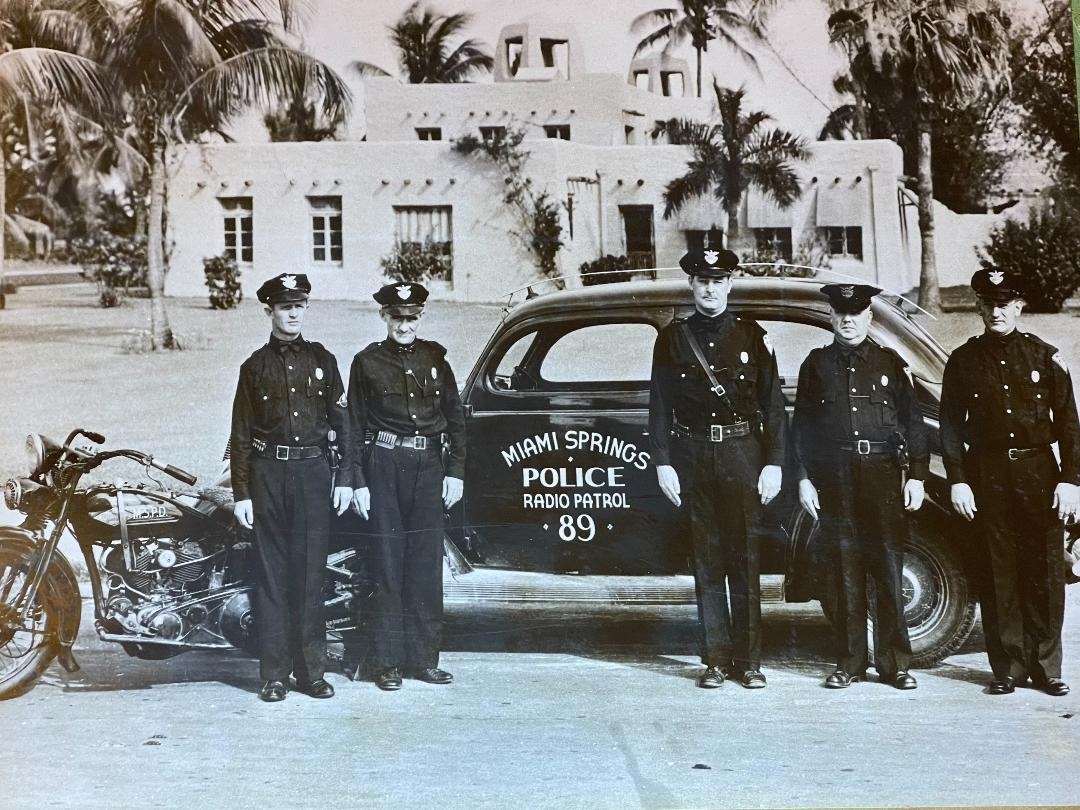

1937 Miami Springs Police Department – Photo Credit: Miami Springs Historical Society
Bill Kniffin and Claire Nelson
Article from May 10, 1942 The Miami News (Miami, Florida)
Walter D. Kniffin Killed at Iwo Jima
Article from Mar 16, 1945 The Miami News (Miami, Florida)
Article from Mar 17, 1945 The Miami Herald (Miami, Florida)
- Learn more about Walter D. Kniffin who sacrificed his life for his country and his family. Special thanks to Bill Tallman for the great work he’s done researching and documenting the Miami Springs residents who gave their lives for our country.
- Veteran’s Administration Page for Wallter Dressler Kniffin
Corporal Elmer F. Park, Army – June 21, 1919 – May 31, 1944
Age: 24

According to an article dated August 10, 1948, from The Miami Herald, Corporal Elmer F. Park (the War Memorial shows Elmer S. Park) “was killed in action…near Rome Italy.” He was survived by his parents who lived at 1329 Westward Drive. He also had a sister named Betty that lived in Hialeah, a brother Horace who lived in North Miami, a brother Tommy who lived in Miami Springs, and another brother who lived in Tennessee.
Elmer F. Park, 894th Tank Destroyer Battalion
Article from Mar 21, 1944 The Miami News (Miami, Florida)
Article from Aug 10, 1948 The Miami Herald (Miami, Florida)
- CPL Elmer F. Park dedication by by Bill Tallman – The Springs Observer.
- Corporal Elmer F. Park dedication page by DelawareWWIIFallen.com.
- CPL Elmer Franklin Park Memorial Page.
- U.K. Forces War Records Page
T/4 Joseph A. Whitesell, Army – June 9, 1924 – July 10, 1944
Age: 20
An article posted by The Miami News on October 6, 1944, recorded the death of Joseph A. Whitesell, son of Mrs. Mary C. Whitesell of 389 Pinecrest Drive in Miami Springs.

Marriage of Hillbauer / Whitesell
Article from Jan 30, 1944 The Miami Herald (Miami, Florida) Marriage
Article from Oct 6, 1944 The Miami News (Miami, Florida)
- Joseph A. Whitesell Dedication Page by Bill Tallman – The Springs Observer
- Joseph A. Whitell Dedication Page
Economic Boost from the War Effort
-
The influx of military activity and personnel helped revitalize the local economy, which was still recovering from the Great Depression.
-
Businesses catering to soldiers and their families began to open or expand, including restaurants, service stations, and shops.
Postwar Housing Boom (Late 1940s)
-
After WWII ended in 1945, returning veterans fueled a nationwide demand for housing, including in Miami Springs.
-
The city saw a surge in residential construction, especially modest single-family homes built for GI families.
-
This marked the beginning of Miami Springs’ transformation into a solid middle-class suburb.
Preservation of the Curtiss Legacy
-
Efforts began to recognize and preserve the historical contributions of Glenn Curtiss, even as the city modernized.
-
Curtiss Parkway and other landmarks were named in his honor to maintain his connection to the city’s identity.
1941: 4th of July Boat Parade
1945: Miami Open Golf Tournament
1945 Miami Open Golf Tournament at the Miami Springs Country Club by Ken Wilde
1947: Miami Springs Bans Horses
Prior to 1947, you could have a horse in Miami Springs. That all ended when Miami Springs banned horses back in ’47. Not all residents were happy with this change. So much so, that about 50 residents in the southwestern section of Miami Springs decided to secede and establish a new municipality, the Village of Virginia Gardens.

July 10,1947: Incorporation of the Village of Virginia Gardens
Thanks to the 50 residents who decided to secede from Miami Springs over the ability to keep their horses on their large estates, they established the Village of Virginia Gardens. Many of the wealthy transplants who founded the Village originally lived in the state of Virginia.
September – October 1947: Flooding of Miami Springs / Hialeah
From Miami Springs Historian, Ken Wilde: “This photo shows the Miami Springs Circle during the flood of Sept 17, 1947 caused by Hurricane VI. It was shot from the 2nd floor of John Stadnik’s newly opened pharmacy & luncheonette. Notice kids playing in the two canoes & waving to the photographer. If you were lucky enough to live on high ground you quickly became aware of the multitude of snakes that lived in Miami Springs at that time. My childhood friend John Drake (RIP) who grew up at 340 Rosedale Drive had a venomous Cotton Mouth Moccasin wrapped around the front doorknob of his house. 51 people died (17 in Florida) as a result of Hurricane VI.”
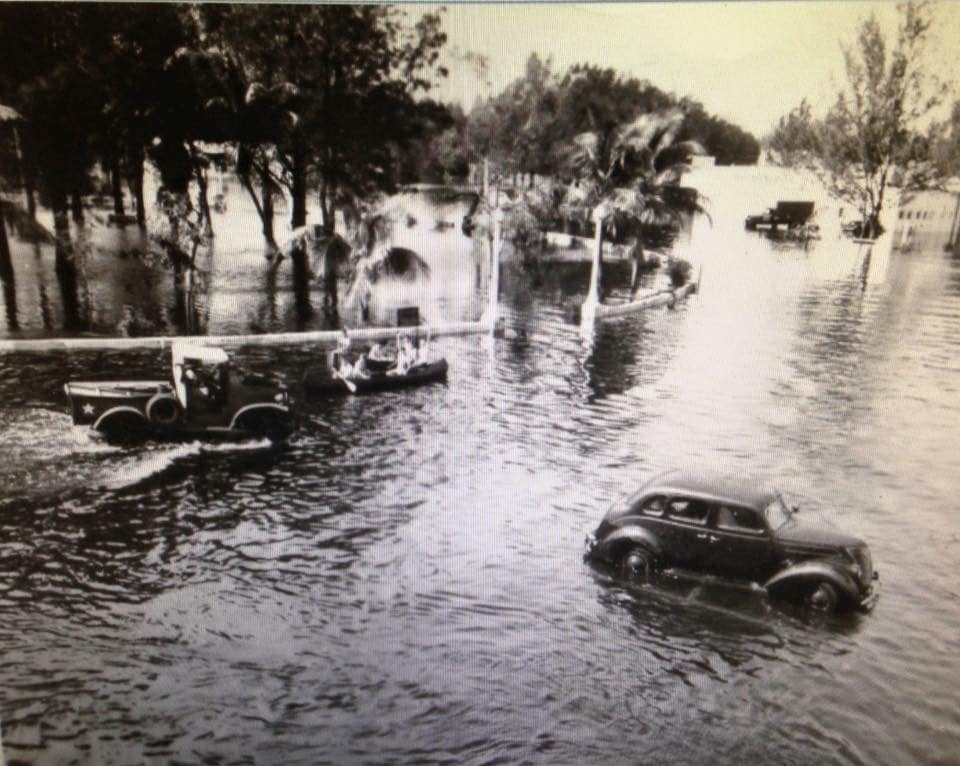
Miami Springs Circle during the flood of Sept 17, 1947 – Photo Courtesy Miami Springs Historical Society
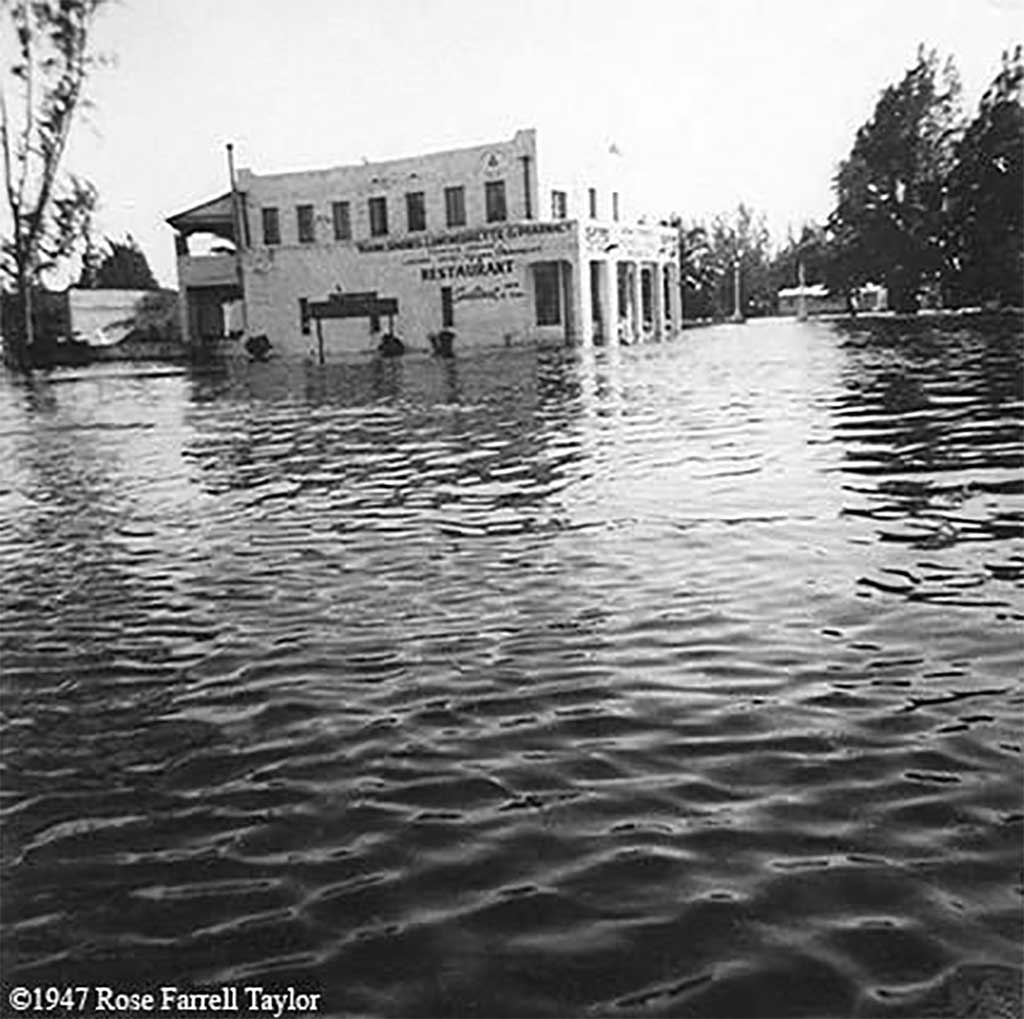
The first storm to hit the area was the 1947 Fort Lauderdale Hurricane that struck on September 16th. According to Wikipedia, “Half the homes in Miami Springs” were flooded by this storm.
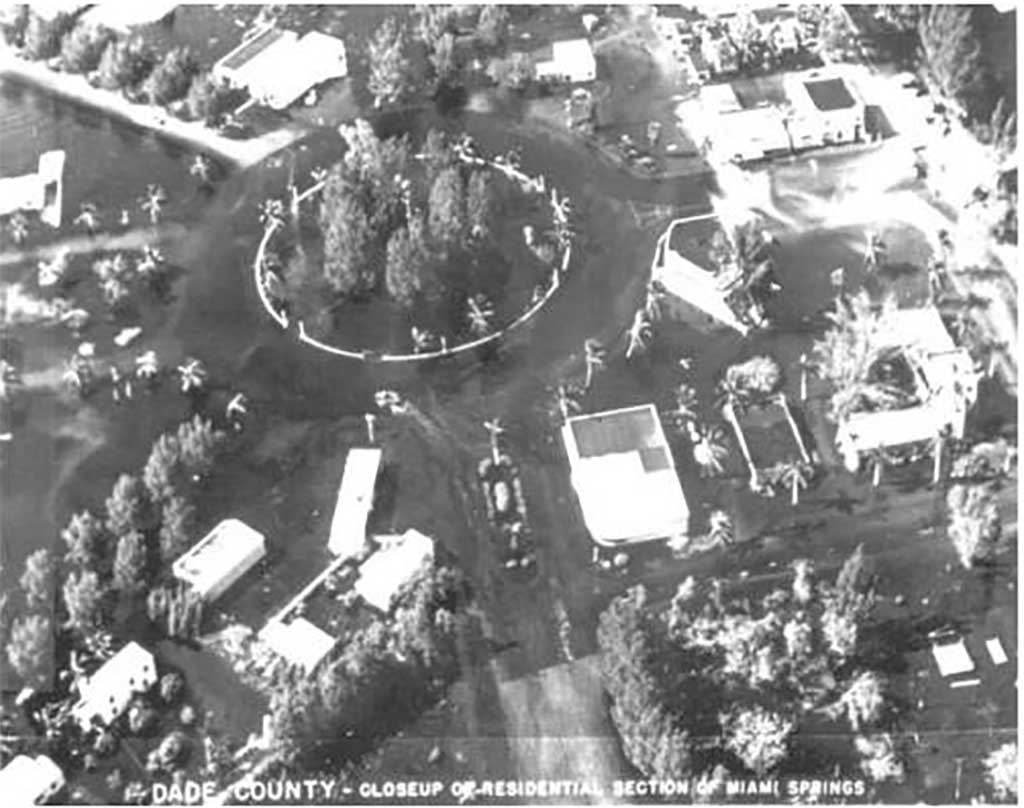
But that wasn’t the only storm to hit the area. Less than 30 days later, on October 12, 1947, another Hurricane dumped a record amount of rain in the area. According to Wikipedia, a “weather observation site in Hialeah” recorded over an inch of rain in just 10 minutes, and 6 inches of rain in just over one hour. The continuous rainfall and the previously saturated ground left Hialeah “submerged under 6 feet of water. Similarly, ‘waist deep’ depths were reported in nearby Miami Springs.”
The Kellar Home at 22 Flagler Drive During the Great South Florida Flood of 1947 by Ken Wilde
Oct 6, 1948: Flooded Persch Lake
1948 Flooded Persch Lake by Ken Wilde, Historian, Miami Springs Historical Society
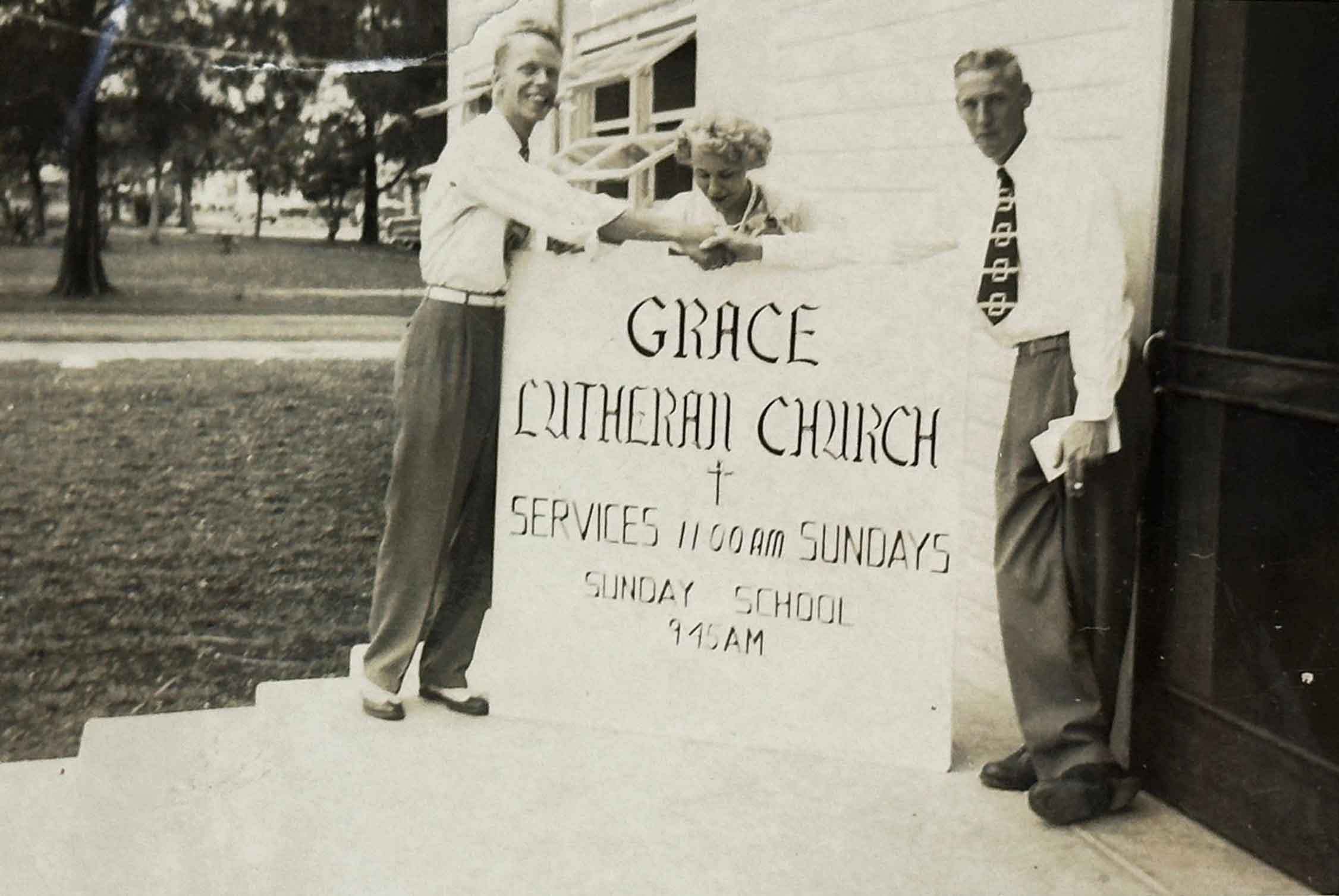
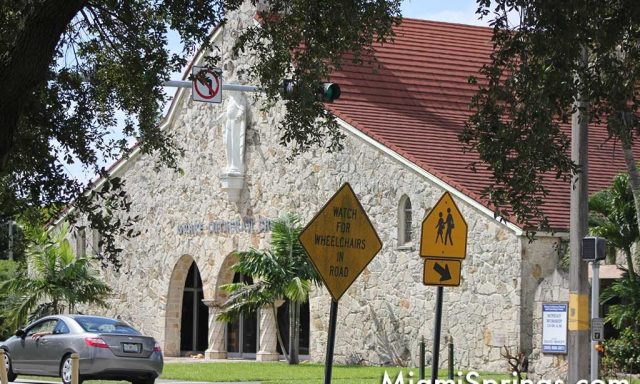
1949: Grace Lutheran Church
Grace Lutheran Church opened in 1949 with the help of a very young Pastor Schmidt.
Related Articles:
Centennial Celebrations: