


The City of Miami Springs has spent months on studies, research, surveys, presentations, and discussions in an attempt to improve the character of NW 36th Street.
The culmination of that work lies in a Charter Amendment heading to the ballot this August. Let’s take a look at the ballot language:
Revitalizing the Northwest 36 Street District

The Charter provides that buildings that include more than 2 residential dwelling units shall not exceed 3 stories and a maximum of 40 feet in height.
To revitalize and attract investment to the Northwest 36 Street District, it is proposed to exempt buildings with residential units located east of East Drive in the District from the Charter’s restriction, subject to current zoning height limitations.
Shall the above-described amendment be adopted?
-
- Yes [ ]
- No [ ]
What is the area in question?
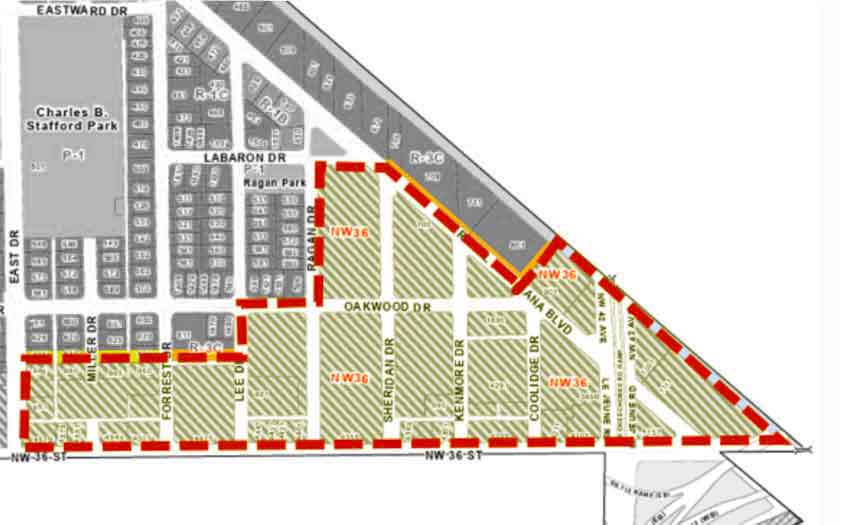
As the ballot states, it’s the section of the NW 36th Street District east of East Drive. However, the NW 36th Street District is not just 36th Street. That’s why the map below does not look like a straight line parallel to NW 36th street.
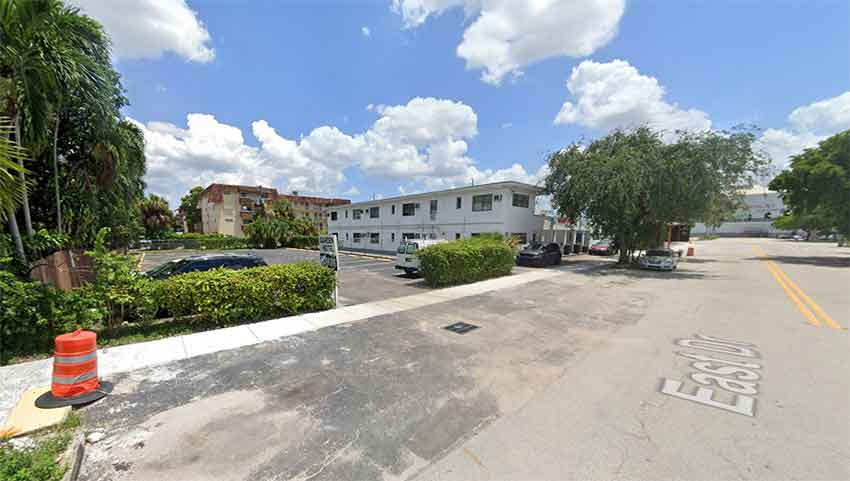
Western Edge: East Drive
East Drive marks the western edge of the NW 36th Street District. The southern edge of the district includes NW 36th Street and continues north about two-thirds of the block, but falls short of Oakwood Drive.
Lee Drive
At Lee Drive, the district juts north to Oakwood Drive. That corner property features a paved parking lot with minimal development.
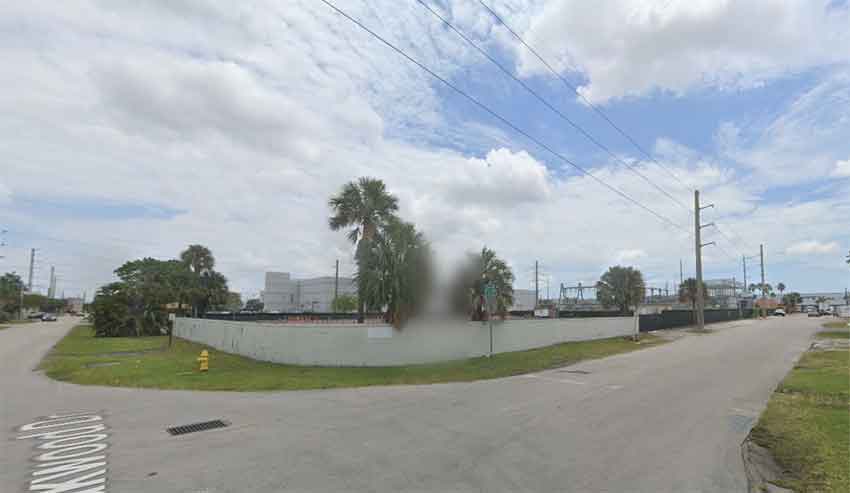
Ragan Drive
The district juts north again at Ragan Drive. Currently, this property holds an airport parking lot.
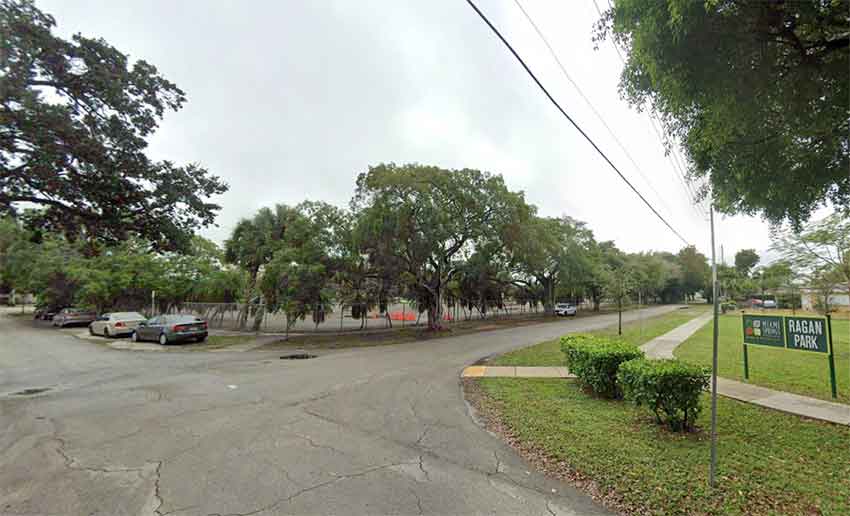
This is where three 10 story apartment towers were once proposed by former Miami-Dade County Commissioner Kevin Cabrera.
10 Story Apartment Towers with 1,426 Units Proposed for Miami Springs
This property has been a target for development for nearly 50 years or about half of Miami Springs’ 100 year anniversary.
Poinciana Boulevard
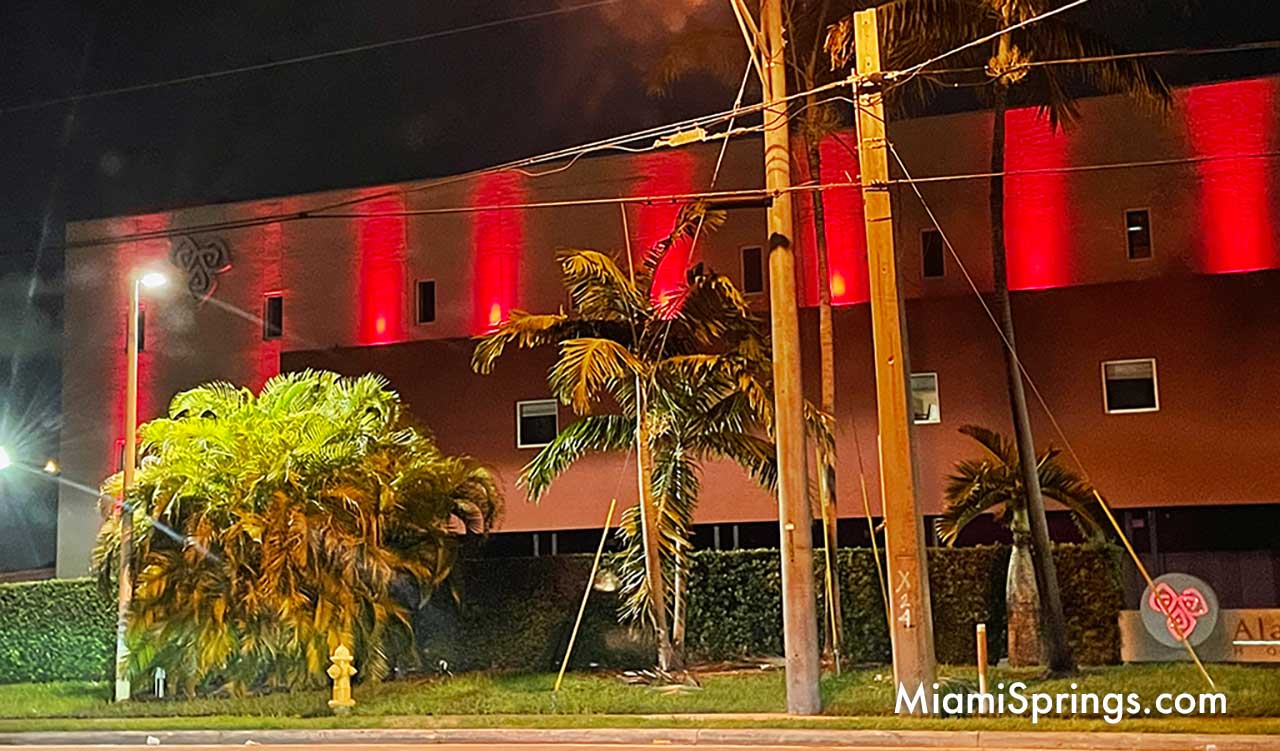
The district encroaches to the north side of South Royal Poinciana Boulevard at the Aladdin Hotel Building.
I suspect most Miami Springs residents would love to see this hotel and its history of serious criminal incidents (including murder) demolished and replaced with an upscale residential development.
Holiday Inn
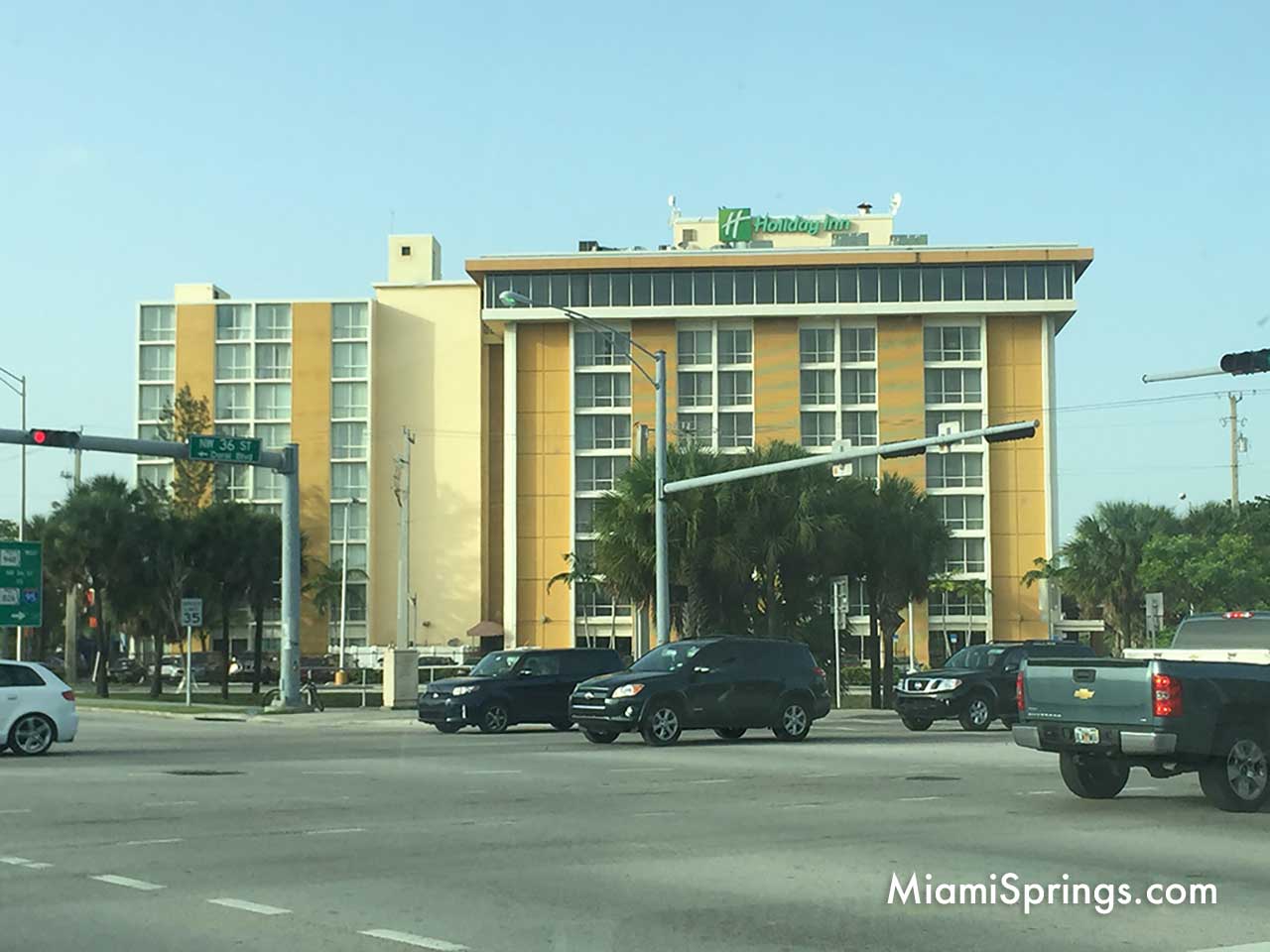
The district ends at the Holiday Inn property located on South Royal Poinciana Boulevard and Le Jeune Road.
What happens if the ballot passes?
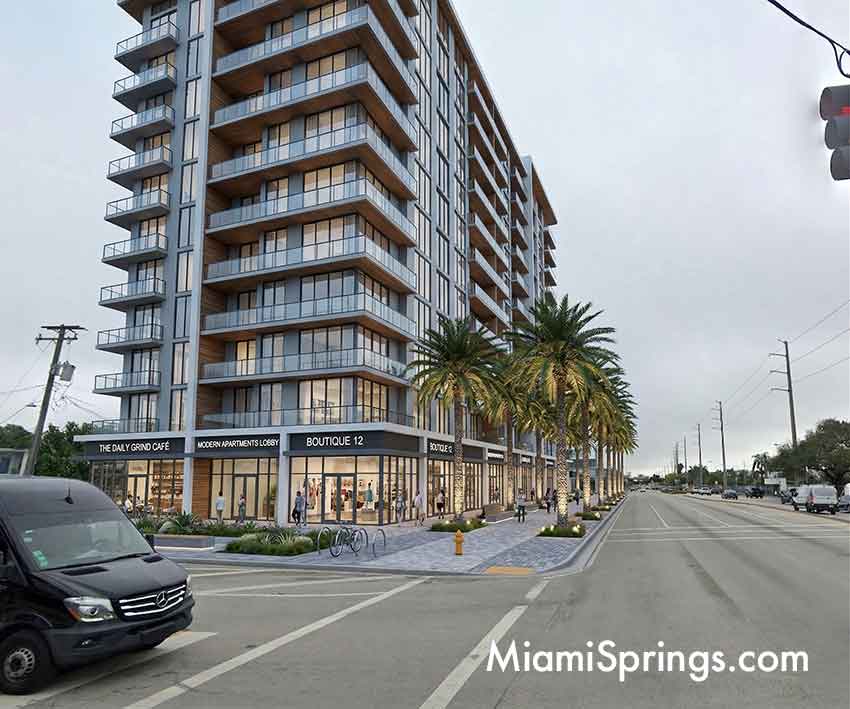
If residents vote YES, it will remove the current limit of residential height limit of 3 stories within the district described above. In other words, it’ll allow developers to build bigger denser apartments. That means we can see 10 to 12 story apartment towers developed in the district described above.
In other words, those empty parking lots with minimal demolition costs become attractive properties for dense development.
It also provides a financial incentive to demolish older buildings for newer, bigger buildings.
Housing Crisis
Folks, Miami-Dade County is under immense pressure to add residential units. Miami Springs has what is arguably the best location in Miami-Dade County. Our central location adjacent to the airport provides quick access to downtown Miami, Brickell, Miami Beach, Coral Gables, Doral and much more.
If you step away from Miami Springs, all you see are cranes everywhere. Miami-Dade County is undergoing a “New Yorkification” as we have no where to go but up. The Atlantic Ocean is our eastern boundary of development. The Everglades is our western boundary. And guess what? We’re built out. We can only go up.
Where’s the benefit to the resident?
If you’re an existing resident, how does this benefit you? What are the pros?
Here’s a quick summary:
Lower Crime – By replacing properties that have attracted transients, prostitution, drugs, and even violent crimes with longer term residents, it should have a positive impact on lowering crime in the area and lowering policing costs.
Increase Tax Revenues – Denser, high value real estate will improve tax revenues for the municipality. This is generally financially advantageous to the municipality during normal circumstances. It adds another layer of revenue if the state of Florida passes the elimination of property taxes.
Increase Curb Appeal – In a perfect world, this will increase the curb appeal along NW 36th Street. But that’s only going to happen if we demand architectural excellence far beyond what we got downtown. A great example of positive curb appeal is the Miami Realtors Association building which has been well received by the community.
Miami Realtors Merger to Create the World’s Largest Realtor Association
What’s the negative for residents?
We can answer the negatives in a single word: Density.
Density can mean many things, but it ultimately boils down to more people. More people means more concentrated traffic.
How many more people? It depends. But we analyzed the original proposal for three residential towers on Ragan Drive and it could add as many as 3,950 new residents in Miami Springs.
That would blow up our density from 13,859 residents (according to the U.S. Census Data) to somewhere near 17,809 residents or a 28% increase in the Miami Springs population.
That would also be a 28% increase in demand for our schools, parks, police, etc. Can our city handle a 28% increase in demand for city services?
The higher density also means that your vote and your voice as residents of a small town gets diluted.
Council Record
The Miami Springs City Council unanimously approved the ballot language as it appears at the top of this storey.
Your thoughts?
Do we need to hold our nose and vote for more density in order to finally get rid of some of the less desirable properties?
Do we say no to more density and accept the status quo along NW 36th Street in order to retain the small town feel of Miami Springs?
We are encouraging a vigorous debate on this topic. Pros and Cons of each side. Now’s the time to discuss this from all angles BEFORE we reach election day.
When is the vote?
August 18, 2026. The good news is that this is the same date of the countywide primary election. That means, the City of Miami Springs saves money not having to run a special election just for the municipality. The city is simply adding a ballot question to the existing primary election.
This is a good way to get more participation from residents and save money at the same time.























Excellent comments by Mr.Llewelyn . Let’s keep the charm and peace we still have in Miami Springs. Perhaps a smaller project more in tune with our values will come along.
Just Say NO! Politicians and developers like to say that building more units with higher density is a solution to various problems. It rarely is. Look around Dade County and beyond. Higher density means more traffic, congestion, and lower quality of life. In this case, it would also create a large voting bloc of residents who will not be living in and appreciating our mostly single-family, low-density neighborhoods. Without a commitment to the quality of life we all cherish, they can easily be manipulated by slick propaganda campaigns and political operatives whose loyalty is to developers, not the residents. Like the Town Center debacle that was shoved down our throats. A few decades ago, there was a move to redevelop downtown. They brought in Dover Khol, who did a study that said we could revitalize downtown with massive development projects. It was so alarming that some of us banded together to gather signatures for a charter amendment to put the 3-story height limitation on the ballot. As I remember, it passed with over 70% of the voters. Hence, we have had the height limitations since then, and it has helped limit the damage of the Town Center development by preventing more than 3 stories. We should not change that now so that developers can make a bigger profit. 36th Street needs work for sure. But high-density development is not the answer. Another factor is that the state has pretty much stripped residents of the right to decide land use. The county is always looking for ways to override local zoning and residents’ rights. Fortunately, we have a height limitation already in place for good reason. Let’s keep it there. Just Say NO!