


Ouch. If you’ve filled up your car with gas lately, you’ve probably been hit with sticker shock as gas prices hit or surpass $4 per gallon in our community.
So we decided to drive around Miami Springs to find the lowest priced gas in Miami Springs. (Note: The prices listed here were taken Wednesday, April 1st after 9pm. Prices are fluid and subject to change without notice.) Here’s what we found:
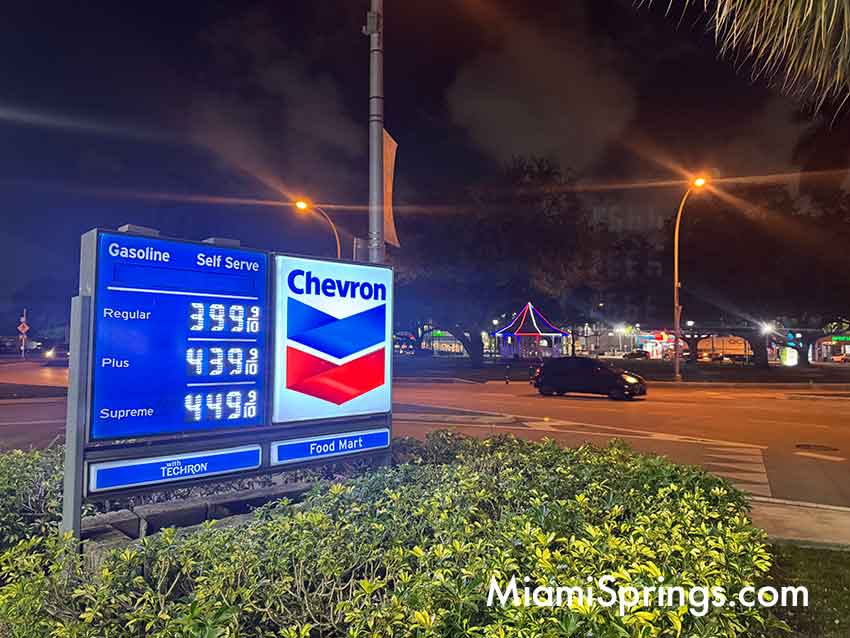
Miami Springs Chevron on the Circle
Regular gas is $3.999 per gallon.

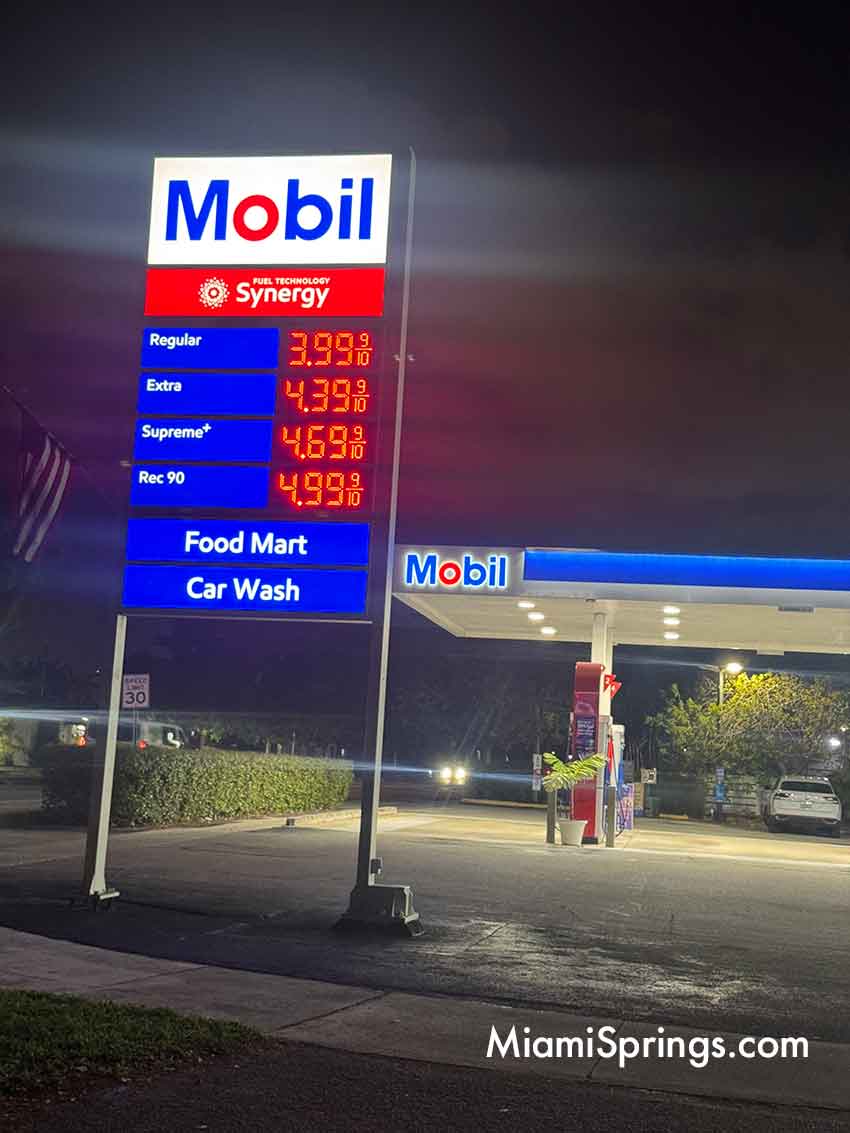
Miami Springs Mobil on N. Royal Poinciana
Regular gas is $3.999 per gallon.
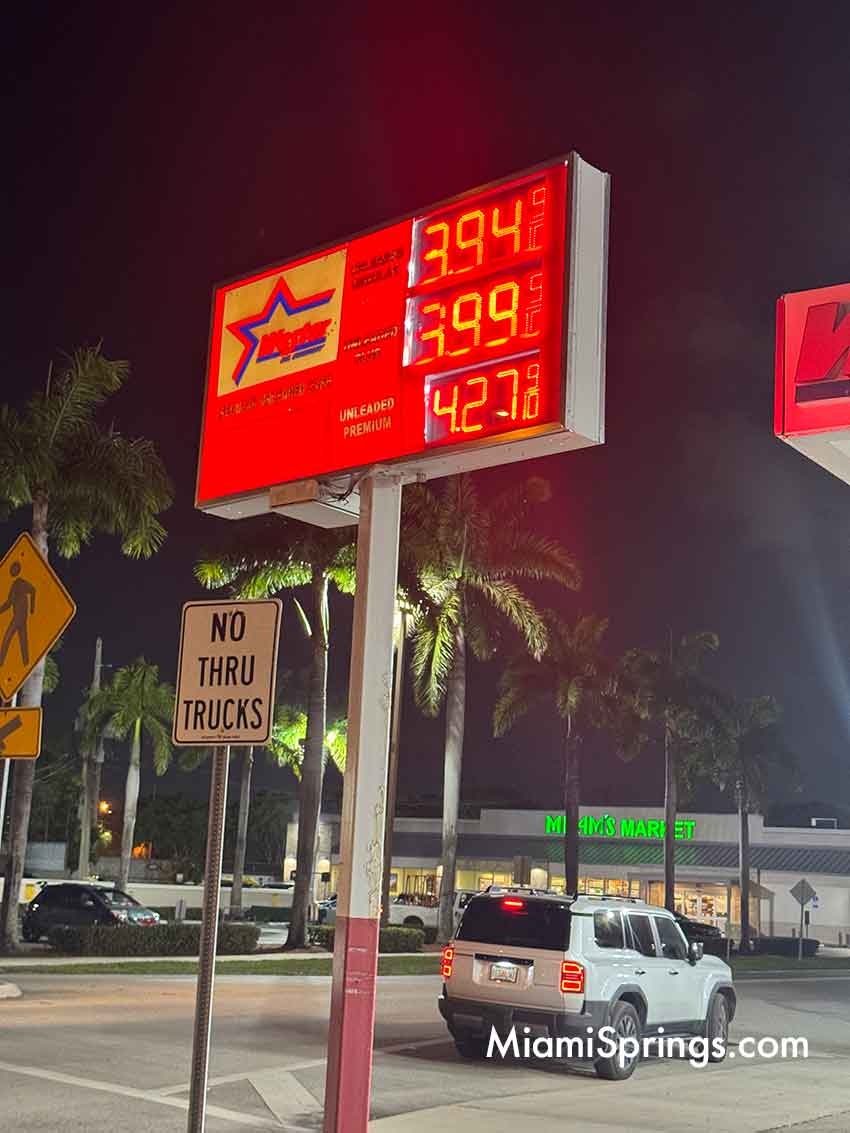
Westar Gas Station on the Circle
Regular gas is $3.999 per gallon.
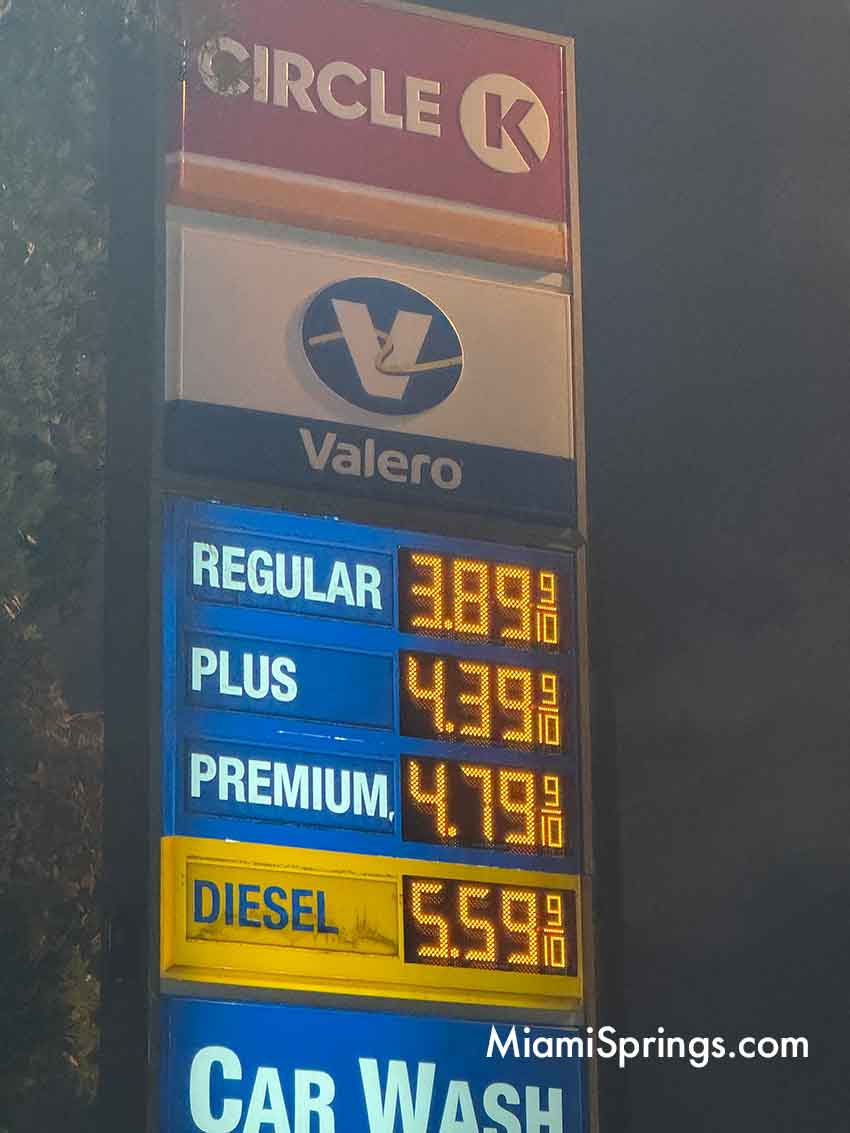
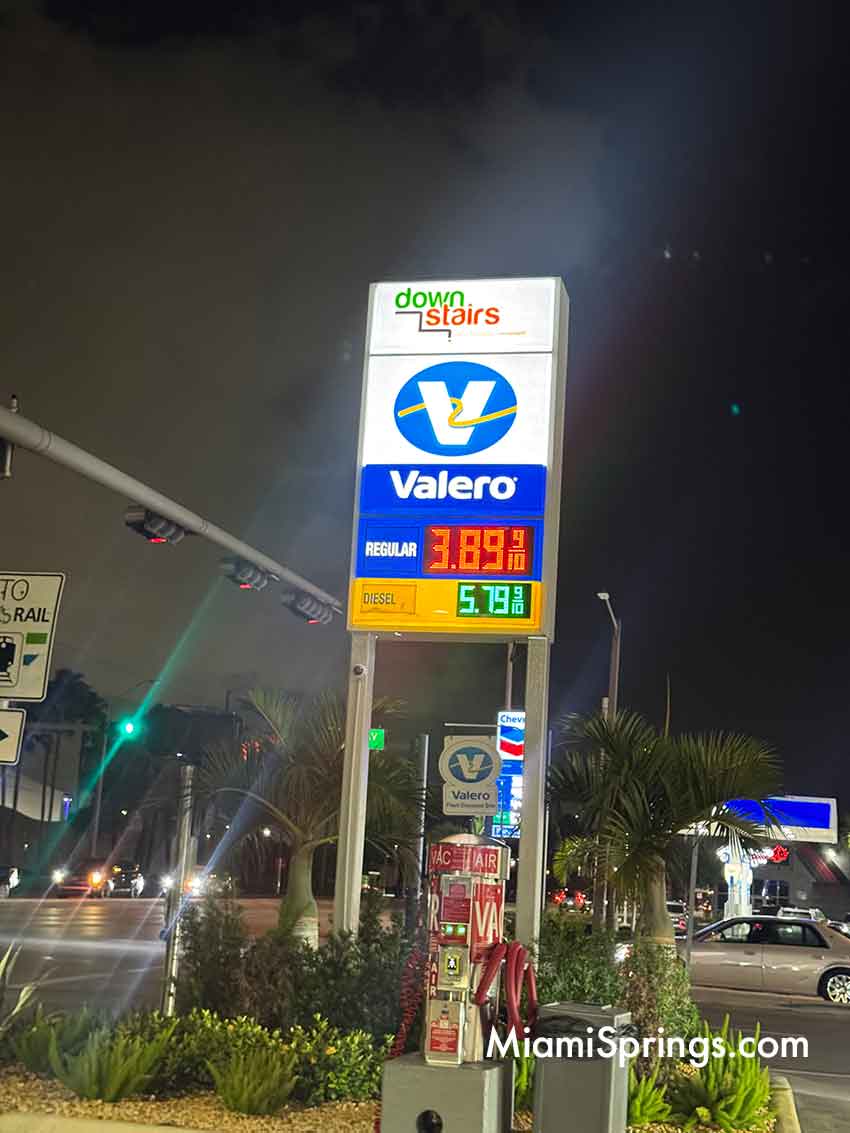
Circle K Valero at 4801 NW 36th Street
Regular gas is $3.899 per gallon.
Valero at 5687 NW 36th Street
Regular gas is $3.899 per gallon.
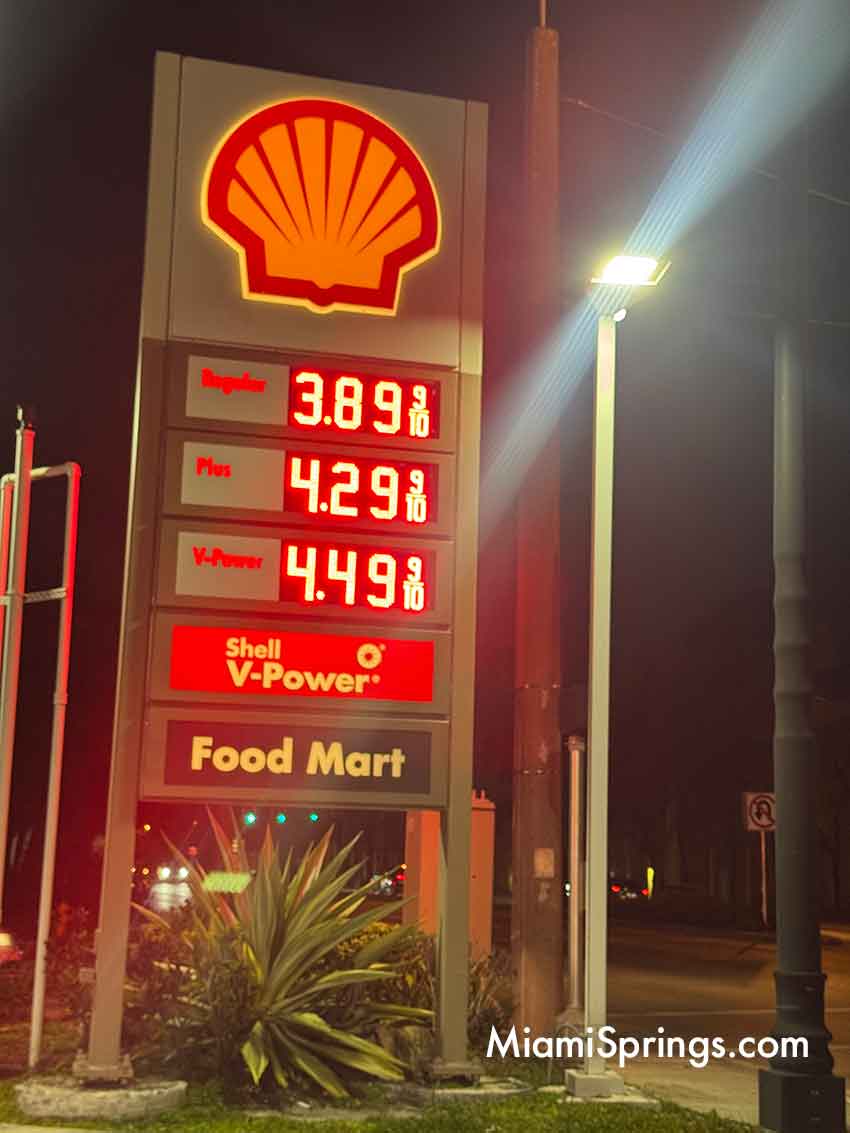
Shell at 5305 NW 36th Street
Regular gas is $3.899 per gallon.
Chevron at 5701 NW 36th Street
Regular gas is $3.899 per gallon. 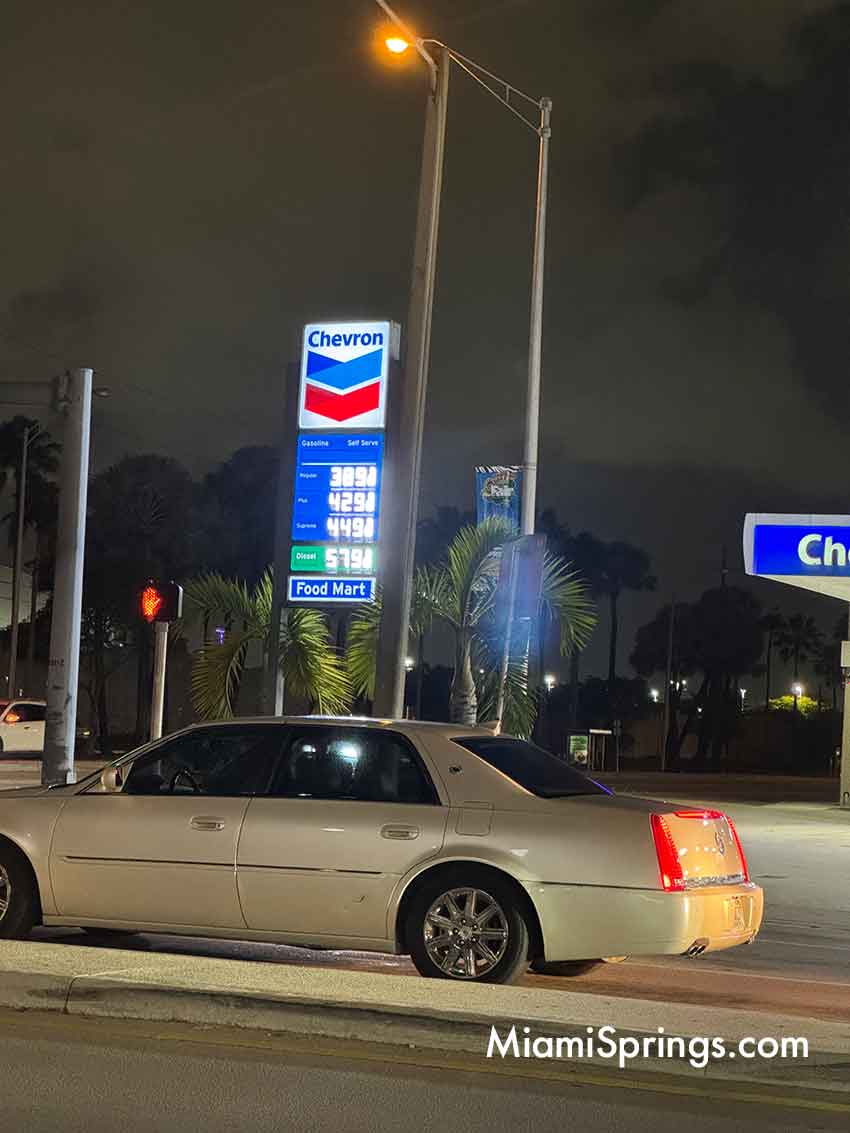
Bottom line: Gas prices are high.
Will gas prices go higher? Will it stay at this price? Or will gas prices come crashing back down?
Honestly, that’s for the speculators as none of us have a crystal ball to predict the future.
In the meantime, here are some tips to save on fuel:
Here are the most effective, data-backed ways to improve your fuel economy:
1. Adjust Your Driving Habits
-
Drive Sensibly: Aggressive driving—which includes speeding, rapid acceleration, and hard braking—is one of the biggest fuel wasters. It can lower your gas mileage by 15% to 30% at highway speeds and 10% to 40% in stop-and-go traffic. Accelerate smoothly and anticipate stops.
-
Observe the Speed Limit: Gas mileage usually decreases rapidly at speeds above 50 mph. As a general rule, for every 5 mph you drive over 50 mph, you are effectively paying an extra $0.18 to $0.30 per gallon.
-
Use Cruise Control: When driving on flat highways, cruise control helps you maintain a constant speed, which prevents unnecessary acceleration and saves fuel.
-
Avoid Excessive Idling: Idling uses a quarter to a half-gallon of fuel per hour. If you are safely stopped and expect to wait for more than 10 to 30 seconds, turning off the engine actually uses less fuel than letting it run.
2. Lighten the Load and Reduce Drag
-
Remove Excess Weight: Extra weight makes your engine work harder. An extra 100 pounds rattling around in your trunk or cabin can reduce your fuel economy by about 1%.
-
Ditch the Roof Cargo: A large roof-top cargo box acts like a parachute, reducing fuel economy by 6% to 17% on the highway and up to 25% at interstate speeds. If you need extra storage, a rear-mounted cargo box is much more aerodynamic and only reduces fuel economy by 1% to 5%.
-
Manage Your Windows and AC: Running the air conditioning reduces fuel economy by up to 15%. At lower, around-town speeds, roll down the windows to cool off. However, at highway speeds, the aerodynamic drag from open windows consumes more fuel than the AC does, so roll them up and turn the air on.
3. Optimize Vehicle Maintenance
-
Keep Tires Properly Inflated: Under-inflated tires increase rolling resistance on the road. Properly inflating them to the pressure listed inside your driver’s side door jamb (not the maximum pressure on the tire itself) can improve gas mileage by up to 3%.
-
Use the Right Motor Oil: Using the manufacturer’s recommended grade of motor oil can improve gas mileage by 1% to 2%. Look for oil that says “Energy Conserving” on the API performance symbol to ensure it contains friction-reducing additives.
-
Stay Tuned Up: Fixing a car that is noticeably out of tune can improve its gas mileage by an average of 4%. Fixing a major maintenance problem, such as a faulty oxygen sensor, can boost your mileage by as much as 40%.
4. Plan Your Trips Smartly
-
Combine Errands: Your engine runs most efficiently when it is warmed up. Several short trips starting with a cold engine can use twice as much fuel as one longer, continuous trip covering the same distance.
-
Check the Route: Use navigation apps before you leave to check for heavy traffic or accidents. Sitting in unexpected gridlock is a guaranteed way to burn through gas.